Career Insights
6 Mistakes to Avoid While Making Your Resume
Applying to jobs every day but not hearing back? Here are the 6 resume mistakes that could be quietly costing you interviews
By Harshini Prasad · 30 Jul 2026
What is a resume?
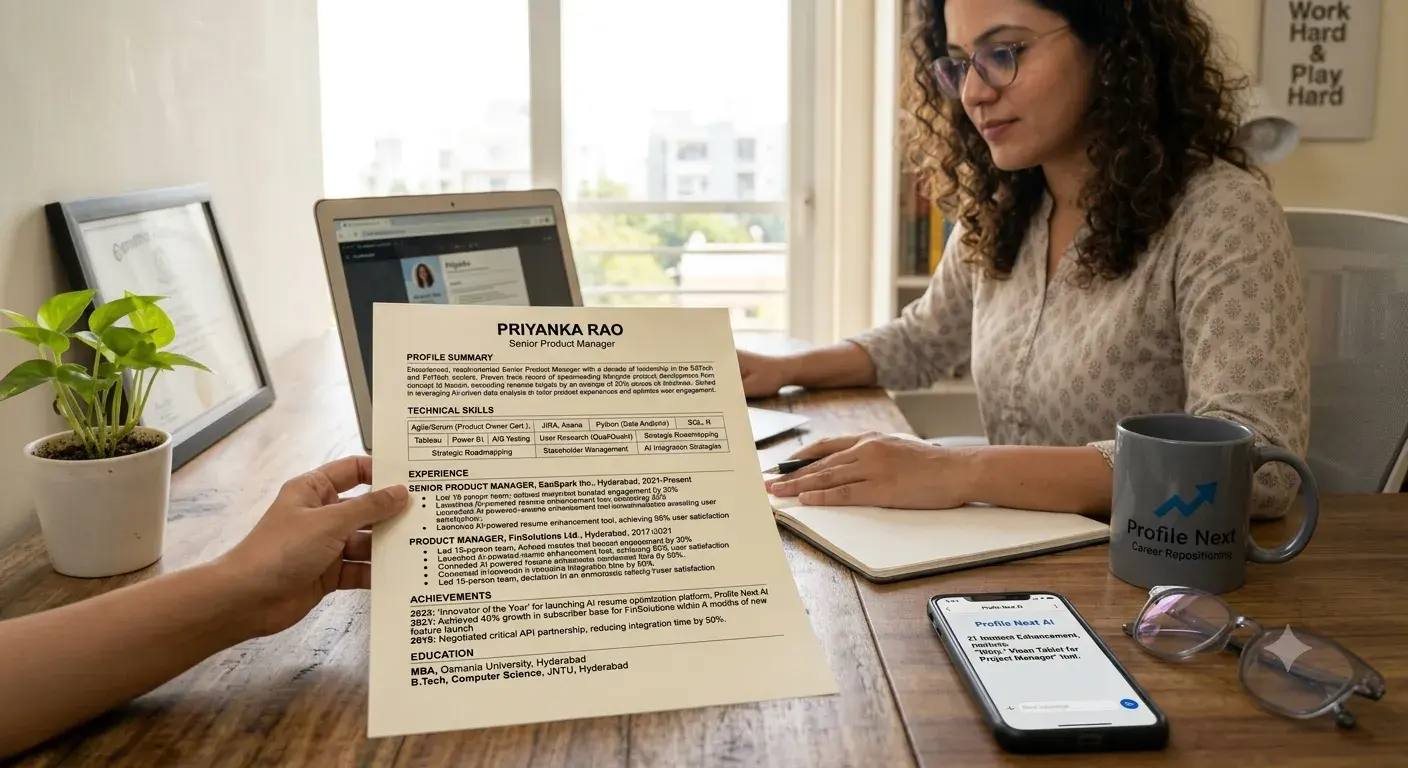
A resume is not just a piece of paper — it's a showcase of all your achievements put together. It can always make or break your interview. Think about it: if you walk into an interview, what's the first thing the recruiter sees? Your resume. Before you say a single word, your resume has already started talking for you.
So if it's doing the talking, it better be saying the right things. Here are 6 mistakes that are probably holding yours back.
1. Using the Same Resume for Every Job
This is probably the single most common mistake, and also the easiest one to fix. Sending the exact same resume to a marketing role, a sales role, and an operations role means none of them are getting your best shot. Recruiters can tell within seconds when a resume feels generic — it's usually too broad, too vague, and missing the specific words from the job description.
Here's the thing: you don't need to rewrite your entire resume for every application. You just need to adjust three things — your summary at the top, your skills section, and the order of your bullet points. If a job description keeps repeating "stakeholder management" and your resume says "coordinated with clients," change it to match. It sounds like a small tweak, but it's often the difference between your resume getting read properly and getting skimmed past.
Think of your base resume as a template, not a final draft. Every application deserves 10-15 minutes of tailoring before you hit send.
2. Listing Duties Instead of Achievements
There's a huge difference between "responsible for managing social media" and "grew Instagram engagement by 40% in 3 months." The first tells a recruiter what your job was. The second tells them what you actually did with it — and that's what gets remembered.
Most people default to writing duties because that's how job descriptions are written, and it feels natural to describe your role the same way. But a resume isn't a job description. It's proof that you did the job well. Every bullet point should try to answer one question: what changed because I was there?
If you don't have a number to back it up, that's okay — not everything can be quantified. But you can still frame it around outcome instead of task. "Wrote blog content" becomes "wrote SEO blog content that ranked on page one for 5 target keywords." The shift from task to result is what separates a forgettable resume from a memorable one.
3. Ignoring Formatting That Recruiters Actually Notice
A resume covered in columns, icons, colour blocks, and creative graphics might look impressive on your screen, but it often works against you in two ways. First, recruiters going through dozens of resumes a day are scanning, not reading — and a cluttered layout slows them down instead of helping them. Second, many companies now use software to screen resumes before a human even opens them, and that software often struggles to read anything that isn't simple, single-column text. Tables and icons can get garbled or skipped entirely.
The safest approach is clean and boring, on purpose. One column, a standard font, clear section headers, and consistent spacing. Save the creativity for your portfolio or your cover letter — your resume's job is to be read easily and quickly, not to win a design award.
4. Overstuffing It with Buzzwords
"Hardworking," "team player," "passionate," "dynamic self-starter," "go-getter" — these words show up on almost every resume a recruiter reads, which means they've basically stopped meaning anything. Claiming you're a great communicator doesn't prove you're a great communicator. Showing an example does.
Instead of naming a trait, show it in action. Instead of "excellent team player," try "collaborated with a 5-person cross-functional team to launch a product 2 weeks ahead of schedule."
It says the same thing about you, except now there's evidence behind it. If you find yourself using an adjective to describe yourself, ask if you can replace it with a specific moment instead.
5. Not Proofreading Properly
A single typo can genuinely be the difference between "shortlisted" and "rejected," especially for roles where attention to detail matters — which, let's be honest, is most roles. A careless spelling mistake or a leftover placeholder like [Company Name]makes a recruiter wonder what else might be careless in your work.
The problem is that after you've stared at your own resume for hours, your brain starts autocorrecting mistakes without you even noticing. A few things that actually help: read it out loud slowly, read it backwards line by line, or send it to someone else entirely — a friend, a senior, anyone with a fresh set of eyes. Don't rely only on spellcheck either; it won't catch a "your" that should've been "you're," or a job title that doesn't match what you actually held.
6. Forgetting That LinkedIn and Naukri Need to Match
Your resume isn't the only thing a recruiter looks at anymore. Most recruiters in India check LinkedIn and Naukri profiles alongside — or even before — opening your resume. If your resume says you were a "Content Writer" but your LinkedIn headline says "Digital Marketing Specialist," it creates doubt instead of confidence, even if both are technically true.
This goes beyond just job titles. Your dates of employment, your key achievements, even the tone of how you describe yourself should feel like the same person across all three. Recruiters notice inconsistency fast, and it's one of those things that's completely within your control to fix — it just requires going back and actually checking all three side by side, instead of updating one and forgetting the others exist.
Why These Mistakes Are Hard to Catch on Your Own
Here's the honest truth: most of these mistakes are invisible to you precisely because it's your own resume. You know the context behind every line, so it reads fine to you — even when a recruiter seeing it cold for the first time would be confused, unimpressed, or skip it entirely. That's not a flaw in you; it's just how close you are to your own story.
This is exactly the gap ProfileNext Career Services exists to close. Our team is made up of former recruiters who've screened thousands of resumes at companies like TCS, Infosys, and MNCs across India — so instead of guessing what "sounds good," we rebuild your resume, LinkedIn, and Naukri profile the way a recruiter actually reads them. That means fixing the formatting that gets lost in ATS software, rewriting your duties into achievements, tightening the buzzwords, catching the typos, and making sure your resume, LinkedIn, and Naukri finally tell one consistent story.
We don't stop at pointing out what's wrong — we sit with you 1:1, understand your career story, and rebuild it properly, then stay with you until it's actually working.
The Bottom Line
A resume isn't just a formality you fill out between job listings — it's the single document doing all the talking before you ever get a chance to.
Every typo, every vague bullet point, every mismatched detail between your resume and LinkedIn is a small reason for a recruiter to move on to the next candidate instead of you.
The good news is that every mistake on this list is fixable, and fixable fast. You don't need a completely new career or a different set of skills — you need your resume to finally reflect the person you already are. Fix these 6 things, and you're not just avoiding rejection. You're putting yourself ahead of almost everyone else in that pile.
And if you'd rather have a former recruiter fix it for you instead of guessing what works — that's exactly what we're here for.