Career Insights
Career Gap on Your Resume: How to Present It With Confidence
A career gap doesn’t have to hold your career back. Learn how to present your career break confidently, highlight the skills you gained, and position yourself for your next opportunity.
By Harshini Prasad · 30 Aug 2026
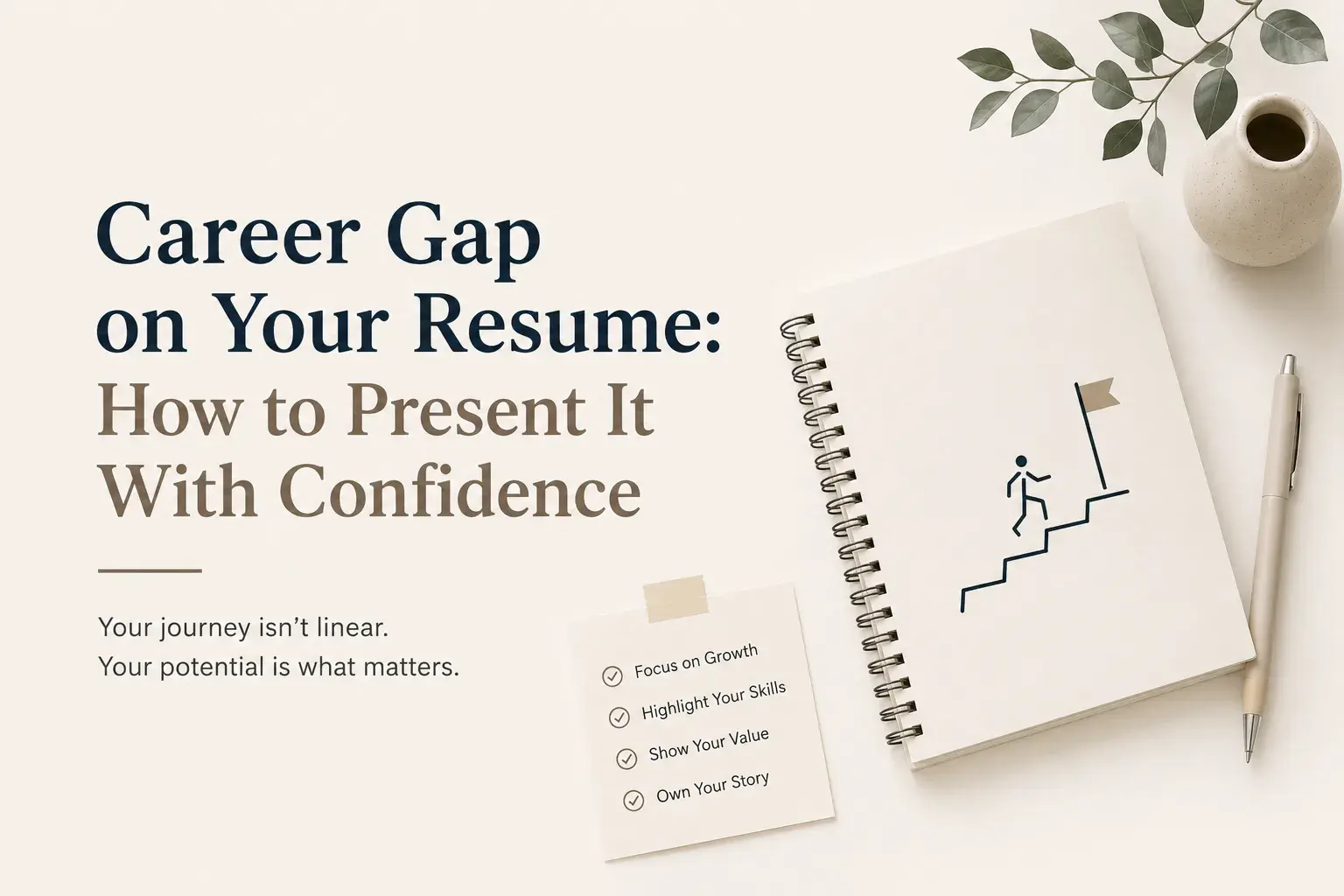
A career gap does not have to be a red flag on your resume.
People take breaks from work for many reasons. They may want to focus on family, pursue higher education, deal with personal responsibilities, travel, recover from burnout, or simply take time to figure out what they want next. Whatever the reason, a gap does not erase the skills and experience you gained before it.
What matters is how you present that period and how clearly your resume shows that you are ready for your next opportunity.
Don’t try to hide the gap
One of the biggest mistakes candidates make is leaving unexplained gaps in their employment history. Trying to hide a career break can create more questions than the gap itself.
Instead, be honest and keep the explanation brief. You do not need to share every personal detail. A simple description such as “Career Break – Family Responsibilities” or “Career Break – Upskilling and Professional Development” can be enough.
The goal is not to apologise for the gap. It is to provide context.
Show what you did during the break
A career break does not necessarily mean you stopped learning.
Also Read: Your Naukri Profile Is Your First Step Towards Your Next Job
Think about what you did during this period. Did you complete a certification? Learn a new tool? Work on freelance projects? Volunteer? Take online courses? Build a portfolio? Even responsibilities outside of formal employment may have helped you develop skills such as communication, organisation, time management, or problem-solving.
If something you did during the gap is relevant to the role you are applying for, include it on your resume
A well-structured resume can help recruiters focus on your skills, achievements, and potential rather than simply the dates between your jobs.
Focus on what you can offer now
Your career gap is only one part of your professional story.
Instead of making the gap the centre of your resume, make your relevant experience and skills easy to find. Highlight your strongest achievements, update your skills section, and tailor your resume to the role you are applying for.
If you are returning to work after a long break, your resume should answer one important question:
Why are you ready for this role now?
Make that answer clear through your recent learning, relevant skills, projects, achievements, and professional experience.
Be prepared to talk about it
If you reach the interview stage, you may be asked about your career break. You do not need to become defensive or uncomfortable.
Keep your answer honest, concise, and forward-looking. Briefly explain why you took the break, mention anything meaningful you worked on during that period, and bring the conversation back to your current career goals.
Also Read: How to Research a Company Before an Interview Complete India Guide 2026
A career gap is part of your timeline. It does not have to define your career.
Your next opportunity is still ahead
Taking time away from work does not mean you have fallen behind permanently. Careers are rarely perfectly linear, and a break can be followed by a strong return.
What matters now is how you position yourself for the opportunities ahead.
If you are returning to work and need help presenting your experience, skills, and career journey effectively, Profile next career services can help you build a stronger professional profile and take the next step with confidence.
Your career gap is a chapter in your story—not the end of it.